In 2015, my mom and that i grew to be Airbnb hosts. The upper level of our condominium, which had turn into too huge for her by myself, is now inhabited by means of friendly friends essentially each other weekend.
As a traveller, I've used Airbnb for a good deal longer. My booking history knows issues i can't consider – it says I used the web site for the first time in 2011 to book a room in long island's East Village.

I lived on this street once, says Airbnb. image credit score: Google road View.
The 12 months 2015 swept an extra new addiction into my hobbies. Now I choose up my mobilephone a couple of times a day to order a ride – or food – through an app. because I live in Indonesia, this app tends to be Go-Jek, our local on-demand bike transportation and start provider. however I additionally use Uber and seize on events.
Your own history with these corporations is probably similar. organizations like Go-Jek, Uber, and Airbnb are persuading people all over to adopt new behaviors. It's occurring at an remarkable tempo.
These companies have whatever in average: they've created digital infrastructures that assist people join and change items and features. Neither Go-Jek nor Airbnb offer those goods or functions themselves – the users do. They're the motorcycle riders or hosts.
The inverted companycorporations of this category are referred to as platforms – a enterprise mannequin that's "ingesting the area." That's the premise of Platform Revolution, a publication co-authored by means of Sangeet Choudary, Geoffrey Parker, and Marshall Van Alstyne.
It describes how platform agencies work, how to construct and function them, and their affect on society.
My first a-ha moment analyzing the e-book got here as I understood that Airbnb, Go-Jek, and Uber are purely the tip of the iceberg, essentially the most talked about apps.

Indonesia's "Uber for bikes," Go-Jek. picture credit score: Go-Jek.
The transformative energy of this model goes deeper – and commenced tons earlier. here's where typical business players should still pay consideration. if they bear in mind what makes platforms so effective, they can undertake some of their elements. but radical alterations are needed.
They promptly grew to become one of the most world's most constructive companies.
a normal business – or a pipe enterprise, because the authors call them in juxtaposition to structures – tries to personal and control each point of its tactics from manufacturing to revenue. This was the historical way of creating large and a hit groups.
Then came the web, and with it businesses like Apple, Google, and fb. all of them operate platform enterprise fashions and at once became one of the most world's most useful businesses.
however Apple, as an instance, wasn't a platform from the beginning. It produces and sells hardware – a classic pipe company. but what made Apple's valuation explode became the iPhone with an operating device that allow a myriad of cool third-party apps join with it – the iOS platform.
Airbnb, Uber, and Go-Jek represent the next wave of corporations in this ongoing shift from pipes to structures. The pace of change is quickening; the transactions on these apps at the moment are more complex and ensue in real-time.
The first rate news for pipe-model businesses is that they've a shot at joining the platform revolution via turning themselves inside out – or "inverting" themselves, as it's described in Platform Revolution.
according to the e-book, there are several methods average businesses can turn into greater platform-like. they could, for example:
The authors describe how Nike is taking place that course by means of bringing its customers collectively as a group during the advertising of health wearables and apps. There are more examples to be taught from.
Platform Revolution is of route an outstanding examine for tech entrepreneurs building the subsequent Uber for x, however it's peculiarly constructive to these operating natural agencies.

Apple's value exploded after 2007, when it introduced the iPhone and iOS platform. supply: Google Finance.
winning systemThe 2d thought from the book that caught with me is the compelling arguments it has to clarify the competitive competencies of platform groups over pipe companies.
the important thing argument for why platforms win is that they scale more desirable. structures develop quicker and at lessen can charge than natural groups because they:
The community impact is a self-reinforcing loop of demand producing extra demand.
It gets even greater than that. boom is, in an effort to speak, inherent to platforms as a result of the network impact.
When Toyota builds automobiles americans like, it has to construct extra automobiles to serve a becoming demand. If there's high demand for Go-Jek drivers, the platform makes it easy for more drivers to sign in. This results in enhanced coverage and shorter ready times, which encourages greater americans to e-book a experience, which creates alternatives for drivers to check in. The self-reinforcing loop of demand generating extra demand is referred to as a community impact.
The momentum it explanations can lead to explosive growth on a neatly-designed platform organizations, however has to be dealt with with care since it can also work in reverse. If sellers on an ecommerce market peddle counterfeit items and go away customers dissatisfied, fewer customers may be willing to shop on the web page, which drives away the legitimate dealers. Then it's all downhill.
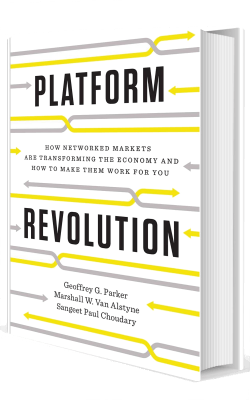
Platform Revolution (Choudary, Parker, van Alstyne)
The abilities for quick growth at competitively priced while making the community effect work to their potential additionally ability platform companies obtain a excessive margin on every transaction they facilitate. These components combined clarify platform companies' quick upward thrust to world dominance.
next up in the box book to the platform revolutionIf the above concept all sound very widespread to you, it's viable that you've examine Platform Scale, Sangeet Choudary's old book that was reviewed on Tech in Asia.
Sangeet then dropped in for an AMA.
in lots of approaches, Revolution, which is fresh off the clicking, builds on Scale's foundations, but it's no longer essential to study Scale first.
Platform Revolution includes 12 chapters. the first 4 cowl primary floor, some of which I've summarized here. In the following chapters, the authors go deeper with suggestions on how to design, launch, monetize, manage, and measure the success of a platform business. That may be the subject matter of the next part of the e-book assessment.

No comments:
Post a Comment